Beginner’s Guide In Choosing the Right Pickleball Racquet
Pickleball has quickly become one of the fastest-growing sports around the world, and for good reason. It’s easy to learn, fun to play, and a great way to stay active. But if you’re just starting out, choosing the right pickleball racquet can make all the difference in how quickly you improve and how much you enjoy the game.
The right racquet can boost your performance, improve comfort, and help you develop your unique play style. The wrong one? It might leave you frustrated, sore, or struggling to keep up..
So before you hit the court, let’s dive into what makes a pickleball racquet perfect for you.

What is a Pickleball Racquet?
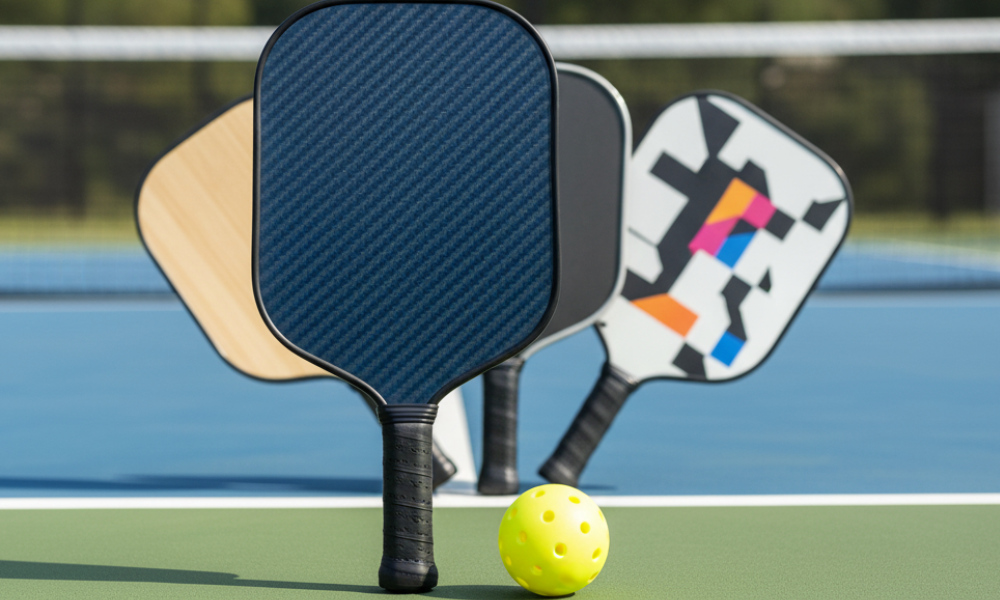
A pickleball racquet (or commonly known as the pickleball paddle) is the main piece of pickleball equipment and is your ultimate weapon on the court. You’ll use it to hit the ball across the net.
While some players use the term “paddle” instead of “racquet,” both refer to the same piece of gear, a flat-faced hitting surface designed specifically for pickleball.
Unlike tennis racquets that use strings, pickleball racquets have a solid face made from materials such as wood, graphite, or composite layers. This solid design helps deliver control, precision, and consistency in every shot.

Overview of the Parts of a Pickleball Racquet
Understanding the anatomy of your racquet helps you know how each part affects your game:
-
Face: The surface area that makes contact with the ball. The texture and material of the face influence your spin, control, and power.
-
Core: The inside layer that gives the racquet its feel. It determines whether the racquet plays “soft” (for control) or “hard” (for power).
-
Edge Guard: A protective rim around the paddle that protects it from scrapes and chips when it hits the ground or court.
-
Grip: The handle you hold. A comfortable grip helps prevent strain, improve accuracy, and maintain stability during fast exchanges.
5 Factors to Consider In Choosing a Pickleball Racquet
1. Weight – Lightweight vs. Midweight vs. Heavy Racquets
Weight is one of the most important things to look at when buying a pickleball racquet.
-
Lightweight racquets (6.8–7.2 oz): Easier to maneuver, offering more control and quicker reactions — great for finesse players.
-
Midweight racquets (7.3–8.2 oz): A balanced option for players seeking both power and control.
-
Heavy racquets (8.3 oz and up): Provide stronger hits and more power but can cause arm fatigue over time.
If you’re new to pickleball, a midweight racquet is often a good starting point.
2. Material – Wood, Composite, Graphite, or Carbon Fiber
The material determines how your racquet performs:
-
Wood: Affordable but heavy; ideal for beginners or casual play.
-
Composite: A mix of materials (like fiberglass and polymer) for balanced performance.
-
Graphite: Lightweight and responsive; offers excellent touch and control.
-
Carbon Fiber: Premium choice for serious players; durable and powerful.
For most beginners, composite or graphite racquets provide the best balance of performance and comfort.
3. Grip Size – How to Measure and Choose the Right One
The correct grip size prevents wrist strain and improves control. To measure your grip, hold your racquet-hand flat and measure from the middle crease of your palm to the tip of your ring finger.
-
Smaller grips offer more wrist action and spin.
-
Larger grips provide more stability and control.
If you’re unsure, choose the smaller grip, you can always add an overgrip for extra comfort.
4. Shape and Surface Texture – How They Affect Spin and Control
Pickleball racquets come in a few different shapes:
-
Standard shape: Offers a balanced feel and consistent sweet spot.
-
Elongated shape: Extends reach and adds power but may sacrifice control.
Surface texture also plays a role. A rougher texture enhances spin, while smoother surfaces favor control and precision shots.
5. Core Construction – Nomex, Polymer, or Aluminum Cores Explained
The core defines your racquet’s personality:
-
Nomex Core: Hard and loud — delivers strong power but less touch.
-
Polymer Core: Soft and quiet — great for control and balanced play.
-
Aluminum Core: Lightweight and offers good control but slightly less durability.
If you’re just starting out, go for a polymer-core racquet, it’s beginner-friendly and easy on the arms.
Common Mistakes When Buying a Pickleball Racquet
-
Choosing Based on Looks or Brand Alone: A visually appealing racquet isn’t always the right fit for your play style.
-
Ignoring Grip Size or Weight: These directly affect comfort and accuracy.
-
Skipping Research on Materials and Cores: Knowing the specs ensures you get the best racquet for your needs.
-
Choosing a “pro” racquet too early: Start simple; upgrade later as your skills grow.
Expert Recommendations
While personal preference matters, here are some reliable brands known for quality pickleball rackets:

Selkirk Vanguard Pro (Invikta)
Pros: The Selkirk Vanguard Pro Invikta is a premium paddle loved by players who crave a mix of control, spin, and pop. Its 12K raw carbon fiber face and advanced core deliver a refined touch with solid power behind each swing, making it a favorite for both competitive and advancing players.
Cons: However, because it’s a high-end model, it can be quite pricey and some users report that the sweet spot feels smaller or “dead” at times. If you’re new to pickleball or on a budget, this one may be more than you need right now.

JOOLA Radius Pro
Pros: If you’re a control player who values touch and finesse, the JOOLA Radius Pro is a fantastic choice. Its rounded, table-tennis-inspired shape gives it a large sweet spot, while the textured carbon surface adds reliable spin and precision. Many players praise its maneuverability and lightweight design, making it easy on the wrist during long rallies.
Cons: On the downside, it doesn’t generate as much raw power as heavier paddles, and a few users have reported minor durability issues after months of use. Still, it’s a great fit for those who prioritize placement and comfort.

ONIX Z5 Graphite
Pros: The ONIX Z5 Graphite is one of the most popular paddles for players of all levels and for good reason. Its graphite face and Nomex honeycomb core give it a crisp, responsive feel that combines control and power beautifully. It’s also quite affordable compared to high-end carbon paddles, making it a solid investment for those looking to improve their game.
Cons: That said, the Z5 is slightly heavier than some newer models, which can lead to fatigue over long matches, and it may not offer the same spin potential as more textured paddles.

Paddletek’s Bantam EX-L
Pros: Paddletek’s Bantam EX-L is known for its exceptional control and comfort, ideal for players who value touch over sheer power. Its polymer core softens the impact and keeps shots consistent, helping to reduce arm strain and improve precision on dinks and drops.
Cons: While this paddle offers great feel, it doesn’t pack as much punch for aggressive baseline hitters and its sound can be a bit muted, which some players interpret as a lack of feedback. Still, for players seeking reliability and smooth handling, the Bantam EX-L is a winner.

Ramsports Typhoon Paddle
Pros: This specific model, the Ramsports Typhoon Gen 3 Precision Power is engineered for players who demand both explosive power and surgical control. It features a honeycomb polymer core with foam injection for enhanced rebound (“diving board” effect) and a carbon-fiber composite face with textured surface for superior spin and bite.
Cons: However, because it’s designed with performance materials, it’s slightly stiffer than entry-level paddles, and those new to pickleball may find it takes a few games to adjust. Overall, it’s a versatile, high-performance racquet that delivers on its promise.
Final Thoughts
Finding the right pickleball racquet isn’t just about specs, it’s about discovering what feels natural to you. Whether you crave power, precision, or all-around performance, understanding racquet weight, material, grip, and core type will help you play your best game.
So take your time, test a few options, and enjoy the process. Once you find the one, your racquet won’t just hit the ball, it’ll feel like an extension of your hand. Game on!