What to Look for When Buying a Sports Bag or Gym Bag
If you’re hitting the courts, the gym, or traveling with gear in tow, your bag isn’t just a carrier, it’s your game-day sidekick. Whether you’re rallying in pickleball or crushing a conditioning session, here’s your playbook for choosing the right sports bag!
Your Theme Workout Bag Checklist
Here’s a quick pre-purchase checklist you can keep in your phone (or printed on your cupboard!) before buying your next sports bag:
-
Enough internal compartments for paddles/racquet + balls/accessories
-
Dedicated shoe or sweaty-gear compartment (or a ventilated section)
-
Padded and comfortable shoulder/back straps
-
Durable materials & reinforced seams/zippers
-
Water or weather resistance
-
Style and carry-modes that fit your non-court life too
-
Right size for your routine (daily vs travel)
-
Sport-specific features (paddle sleeve, water bottle pocket, gear loops)
-
Brand you trust for performance
1. Space & Compartments: Organise Like a Pro
One of the first things to lock in? How much you carry and how you want to carry it. Are you packing paddles, balls, shoes, towels, and a change of clothes? Then you need a bag built to handle it.
What to look out for:
-
Is there a dedicated compartment for your racquet or paddle?
-
Is there a ventilated shoe section (so your training kicks don’t stink up everything else)?
-
Are there small pockets for phone, keys, wallet, water-bottle?
-
Does the bag accommodate your “extra gear” (tape, grips, snacks, change-of-shirt)?
For instance, this LiteCarry Court Backpack highlights that it is “designed with multiple compartments for paddles, apparel, shoes, and accessories. That kind of structure gives you real-world utility when you’re heading out from work to gym to court.

2. Carry Comfort & Fit: Your Bag Should Work With You
You may be strong, but lugging an overloaded bag with one strap and a 30-minute commute will test your patience. For those who train consistently, comfort matters.
What to look out for:
-
Are the straps padded and comfortable? Backpack style vs. tote style—choose what fits your routine.
-
Does the bag sit well on your back or over your shoulder without wobbling or posing risk in transit?
-
Is the weight distributed so that you’re not leaning sideways or compensating?
-
If your sport requires quick transitions (court to car, gym to shower), is it easy to pick up and go?
3. Durability & Weather-Resistance: Ready for the Grind
Your bag is going to see court dust, gym sweat, travel airports, maybe even rain or early-morning dew if you train outdoors. It needs to handle that.
What to look out for:
-
Is the material heavy-duty? Think reinforced fabric, tough zippers, strong seams.
-
Is there water- or splash-resistance? Rainy commute + sweaty gear = disaster without it.
-
Are high-wear areas (corners, bottom panel) reinforced?
-
Does the bag maintain its shape (so paddles and gear don’t get crushed)?
So if you’re serious about training and want gear that keeps up, durability is non-negotiable.
4. Style & Versatility: From Court to Café
Yes, style counts! Because when you’re carrying gear, you want something that doesn’t scream “just a gym bag” when you grab coffee afterwards. Especially if you train socially or travel.
What to look out for:
-
Clean design that works beyond the court.
-
Optional carry modes (backpack, tote handles, shoulder strap).
-
Colour and trim options that fit your personal aesthetic.
-
A tote or bag that transitions seamlessly from game time to errands or travel.
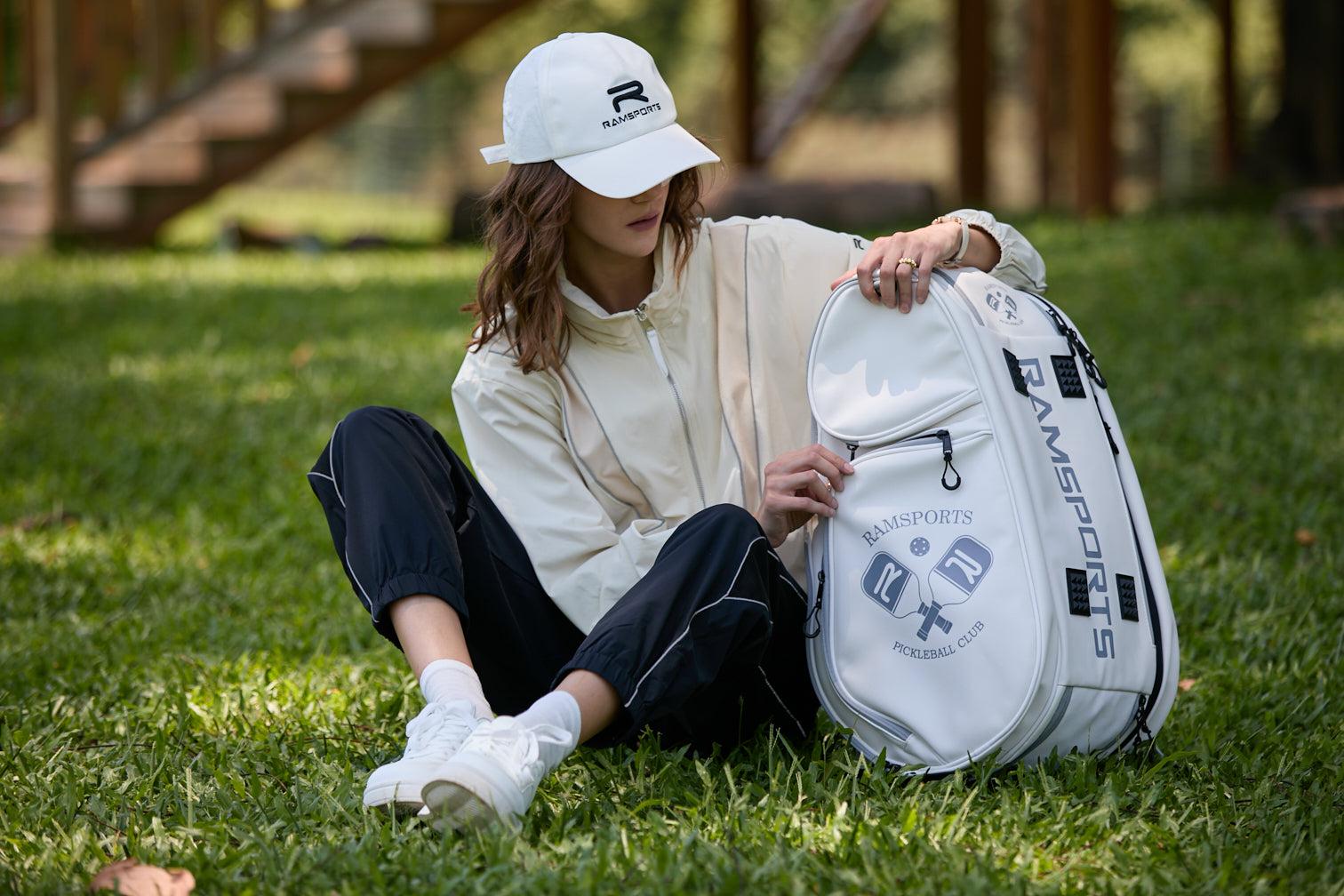
Another example is from Ramsports Court Luxe Tote – Light, which is designed for functionality and flair … the bag includes a ventilated shoe compartment and dedicated paddle storage merges sport-utility with style.

5. Size & Weight: Match It to Your Routine
If you’re only carrying a paddle, water bottle and towel, you don’t need a 50-litre expedition bag. But if you’re traveling to tournaments, packing extra shoes and gear, you’ll want extra space.
What to look out for:
-
For daily training: mid-size backpack or tote.
-
For tournaments/travel: larger backpack with extra compartments for shoes, accessories, maybe even a laptop.
-
Make sure the bag’s empty weight (without gear) isn’t too heavy. Every extra 500 g adds up when you walk.
-
If you fly with it, check whether it meets carry-on size constraints.
6. Game-Specific Features: Because You’re Not Just Going to the Gym
If you’re playing sport, especially something like pickleball, then your pickleball bag should reflect that. That means paddle pockets, ventilated shoe areas, easy-access pouches.
What to look out for:
-
Paddle/racquet sleeve: keeps your paddles upright, unwarped, and protected.
-
Ventilation for shoes or sweaty clothing.
-
External pocket for water bottle or paddle grips.
-
Reinforced bottom panel for when you drop it court-side.
-
Side-kick loops/straps for accessories or even a hanging towel.
So the bags have features like multiple compartments for paddles, apparel, shoes, and accessories are a worthwhile investment.
Final Rally Cry
If you’re serious about your sport, treat your bag like part of your gear lineup because it is. The right bag means your paddles get carried safely, your shoes stay fresh, your water bottle’s always within reach, and you look sharp walking into the court.
Don’t settle for just “a bag.” Choose a bag that supports your game. With the right space, comfort, durability, style and sport-specific features, you’ll be set for every session, every tournament, every season.