Squash vs Pickleball: Key Differences, Benefits, and Which Sport Is Right for You

Pickleball and squash are both popular racquet sports, but they differ in court setup, gameplay intensity, equipment, and accessibility. Pickleball is easier to learn and lower impact, while squash is faster, more physically demanding, and built around endurance and quick reactions.
Once you step onto the court, the differences become immediately clear.
So, If you’re deciding between pickleball vs squash, this guide breaks down the key differences to help you choose the sport that best fits your goals, fitness level, and playing style.
Key Takeaways
- Pickleball is easier to learn and lower impact.
- Squash offers a higher-intensity workout.
- Pickleball is more social and beginner-friendly.
- Squash requires faster reflexes and conditioning.
- Both sports improve coordination and cardiovascular fitness.
What Is the Main Difference Between Pickleball and Squash?
The main difference between pickleball and squash is gameplay intensity and accessibility. Pickleball is played on an open court with slower gameplay and beginner-friendly equipment, while squash is played in an enclosed court with faster rallies, higher physical demands, and more advanced shot control.
What Is Pickleball?
Pickleball is a paddle sport played with a solid paddle and perforated plastic ball on a small court. It combines elements of tennis, badminton, and ping pong.
What Is Squash?
Squash is an indoor racquet sport played in an enclosed court where players hit a rubber ball against the walls at high speed.
Court Size and Playing Environment
The playing environment is one of the most noticeable differences between pickleball and squash.
Pickleball Court
Pickleball is played on a 20 x 44 ft court, roughly the size of a badminton court. It can be set up indoors or outdoors and is commonly found in parks, gyms, and community centers.
Squash Court
Squash is played in a fully enclosed indoor court measuring 32 x 21 ft, where players hit the ball off the front and side walls.
Key Difference: Pickleball courts are smaller and open, while squash courts are enclosed and require more continuous movement in tight spaces.
Equipment Comparison
Equipment plays a major role in how each sport feels on the court.
Pickleball Equipment
-
Solid paddle (no strings)
-
Lightweight plastic ball with holes
-
Lower-impact gear, ideal for beginners
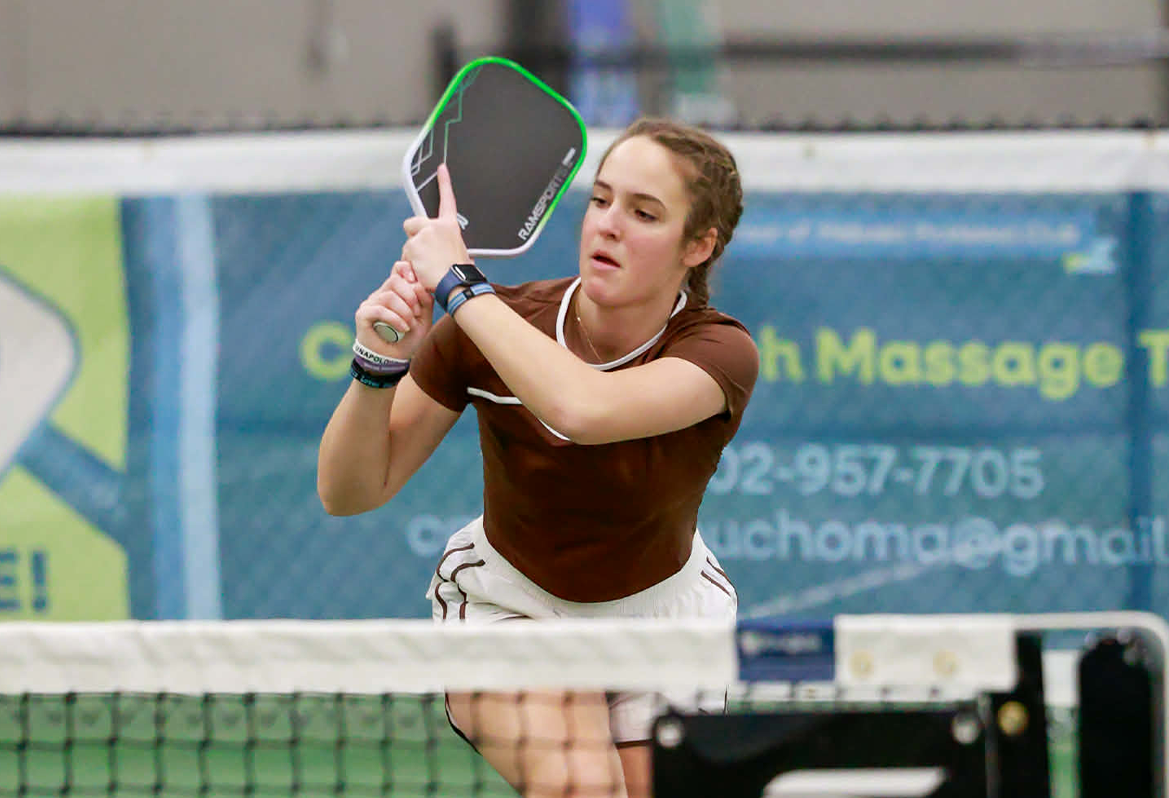
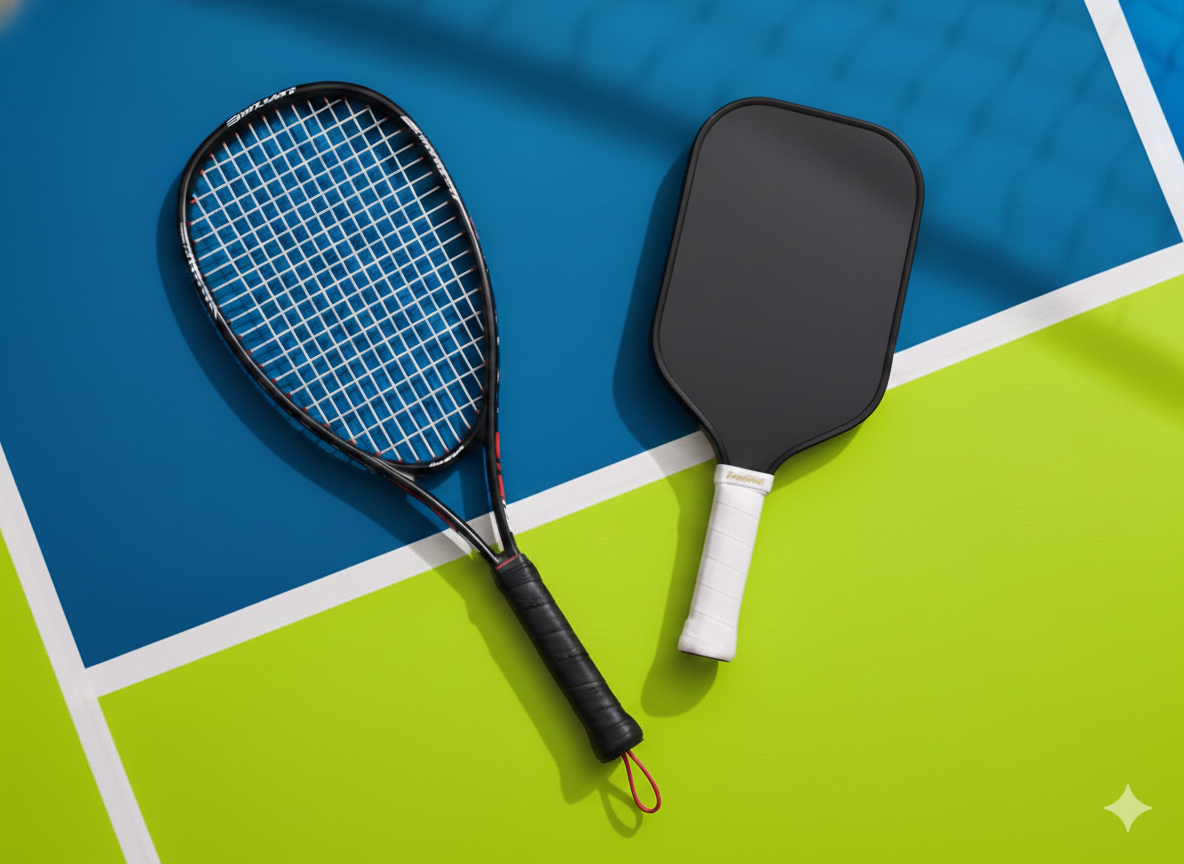
Pickleball uses a solid paddle and a lightweight plastic ball with holes. The paddle is easy to control, and the ball travels at a slower speed compared to most racquet sports. This combination makes pickleball approachable for beginners and easier on the joints, even during longer play sessions.

For beginners looking for an easier paddle to control, lightweight options such as the Ramsports Pink Express Paddle can help improve comfort and consistency during rallies.
Squash Equipment
-
Strung squash racquet
-
Small rubber ball
-
Requires precise control and timing
Players use a strung racquet paired with a small rubber ball that reacts differently depending on swing speed and court temperature. This setup allows for spin, power, and delicate touch shots, but only if the player has proper technique and timing.
Key differences: Pickleball equipment is simpler and more beginner-friendly, while squash equipment is designed for speed, spin, and advanced shot control.

Rules and Gameplay
The way each sport is played further highlights their differences.
Pickleball Gameplay
-
Played as singles or doubles
-
Underhand serves only
-
Slower ball speed
-
Shorter rallies
Pickleball is commonly played in doubles, though singles matches are also popular. Serves are underhand, rallies are generally shorter, and the game emphasizes placement, patience, and smart positioning rather than raw power. Strategy often revolves around controlling the non-volley zone (the “kitchen”) and forcing opponents into mistakes.
Squash Gameplay
-
Played mostly as singles
-
Overhand shots allowed
-
Faster ball speed
-
Longer, more intense rallies
Squash is usually played as singles, with fast-paced rallies that can last several minutes. Players hit the ball overhand and off multiple walls, creating a game that demands speed, endurance, and rapid shot selection.
Key differences: Pickleball focuses on strategy and placement, while squash demands speed, endurance, and quick reflexes.
Physical Intensity and Fitness Benefits
From a fitness perspective, both sports are beneficial, but in very different ways.
Pickleball Fitness Benefits
-
Improves coordination and balance
-
Lower impact on joints
-
Suitable for all ages
-
Great for social play
Pickleball provides a low-impact workout that improves balance, coordination, and mobility. It’s easy on the joints and suitable for players of all ages, making it especially popular among older adults or those returning to physical activity after a break. Despite its lighter impact, pickleball still offers solid cardiovascular benefits, especially during longer matches.
Squash Fitness Benefits
-
High-calorie burn
-
Improves agility and cardiovascular endurance
-
Full-body workout
- Mentally demanding
Squash is widely considered one of the most physically demanding racquet sports in the world. The constant movement, lunging, and rapid direction changes deliver a full-body workout and a high calorie burn. It significantly improves cardiovascular endurance, agility, and mental toughness.
Key differences: Squash is more physically demanding than pickleball because it requires constant movement, rapid direction changes, and longer rallies.
Learning Curve and Accessibility
Accessibility is where pickleball truly shines.
Pickleball Accessibility
-
Easy to learn
- Short learning curve
-
Popular among beginners and older players
Most beginners can learn the basic rules of pickleball in a single session and start enjoying competitive rallies almost immediately. The slower pace and forgiving equipment make early success more likely, which keeps new players motivated and engaged.
We’ve noticed that many beginners transition into pickleball more comfortably because the slower ball speed allows players to sustain rallies earlier and build confidence faster during games.
Squash Accessibility
-
Steeper learning curve
-
Requires conditioning and technique
-
More competitive and physically demanding
Squash has a steeper learning curve. New players often struggle at first with ball control, movement, and stamina. However, those who stick with it are rewarded with a deep, technical sport that offers long-term skill progression and competitive satisfaction.
Key differences: Pickleball is generally easier to pick up, while squash rewards long-term skill development.

Social vs Competitive Experience
-
Pickleball is highly social and community-driven, often played casually or in doubles.
-
Squash is more competitive and intense, typically played one-on-one.
Pickleball is known for its strong social culture. Open play sessions, rotating partners, and doubles matches make it easy to meet new people and enjoy the game casually.
Squash, by contrast, leans toward a more competitive and individual experience. Matches are intense, focused, and physically demanding, often appealing to players who enjoy one-on-one competition and personal performance goals.
Key differences: Your preference for social play or competitive intensity may strongly influence whether pickleball or squash is right for you.
Squash vs Pickleball: Which One Should You Choose?
Choosing between pickleball and squash isn’t about which sport is “better," it’s about which one fits your lifestyle, fitness level, and mindset.
Choose pickleball if you want:
-
A low-impact sport
- Quick learning curve
- Social and recreational play
Choose squash if you want:
-
A high-intensity workout
-
Competitive gameplay
-
Long-term skill development
Key differences: Both sports offer unique benefits, and the best choice ultimately depends on your fitness goals, experience level, and personal preference.
| Feature | Pickleball | Squash |
|---|---|---|
| Court Type | Open court | Enclosed court |
| Difficulty | Beginner-friendly | Steeper learning curve |
| Gameplay Speed | Moderate | Very fast |
| Physical Intensity | Lower impact | High intensity |
| Common Format | Singles & doubles | Mostly singles |
| Best For | Social/recreational play | Competitive fitness |
Final Thoughts
When comparing pickleball vs squash, the real difference lies in experience. Pickleball offers accessibility, community, and enjoyment from day one. Squash delivers intensity, athletic growth, and long-term mastery.
If you’re unsure, the best advice is simple: try both! One may surprise you, or you might even find room in your routine for each. In the end, the best racquet sport is the one that keeps you coming back to the court.
Frequently Asked Questions About Squash vs Pickleball
Is Pickleball easier than Squash?
Yes. Pickleball has a shorter learning curve, slower ball speed, and more forgiving gameplay than squash.
Which burns more calories: Squash or Pickleball?
Squash generally burns more calories because rallies are longer and movement is more intense.
Is Squash harder on the body?
Yes. Squash places greater stress on the knees, lungs, and lower body due to explosive movement.
Can beginners play Pickleball?
Yes. Pickleball is widely considered one of the most beginner-friendly racquet sports.