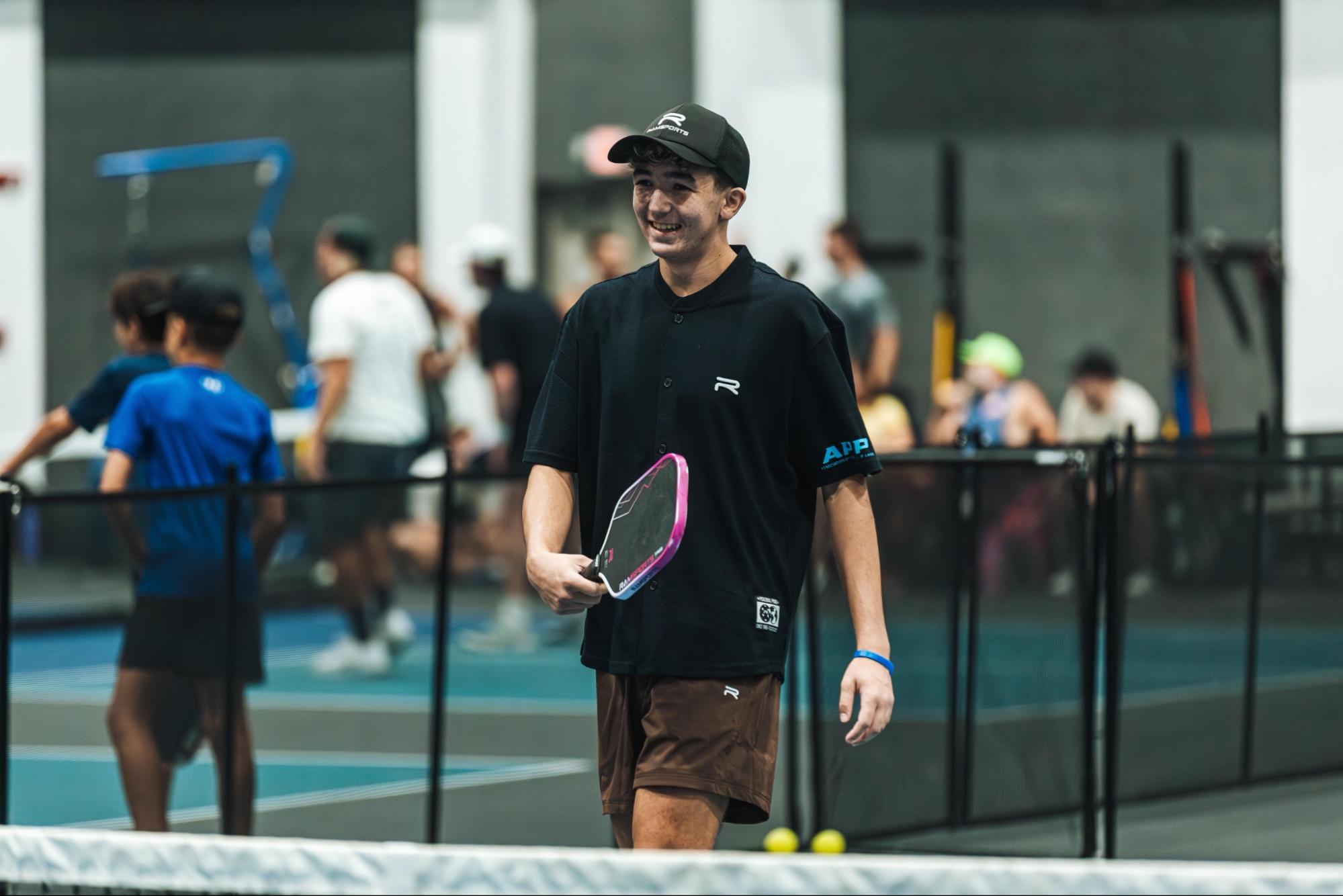
Racquetball vs Pickleball: Which Fast-Paced Racquet Sport Is Right for You?

Racquet sports are growing in popularity worldwide. If you’re deciding between racquetball vs pickleball, the choice can be tricky.
Racquetball is a fast, enclosed indoor sport demanding speed and reflexes. Pickleball is a slower, social, beginner-friendly game played indoors or outdoors with a paddle and a perforated plastic ball.
Your fitness level, goals, and access to courts will determine which is the better fit.
Key Takeaways
- Racquetball is played indoors on a fully enclosed court. It is faster, more intense, and burns more calories.
- Pickleball is played on an open court indoors or outdoors. It is easier to learn, more social, and better suited for all ages.
- Beginners should start with pickleball. It has a smaller learning curve and lower physical demand.
- Competitive athletes who want high-intensity cardio will get more from racquetball.
- Both sports improve agility, coordination, and cardiovascular fitness.

What Is Racquetball?
Racquetball is an indoor racquet sport played on a fully enclosed court with four walls. Players use a small rubber ball and a lightweight racquet, hitting the ball against walls to keep it in play.
Key features:
-
Court: Indoor, fully walled, 40 ft long × 20 ft wide
-
Ball & Racquet: Small, bouncy rubber ball; racquet is light and easy to maneuver
-
Gameplay: Intense rallies that test agility and reaction time
-
Fitness Benefits: Great for cardio, reflex training, and lower-body strength
-
Best For: Competitive players who enjoy speed, agility, and high-energy sports.
Racquetball was invented in 1950 by Joe Sobek in Greenwich, Connecticut. The sport has approximately 3.5 million active players in the United States.

What Is Pickleball?
Pickleball is a versatile racquet sport combining elements of tennis, badminton, and ping-pong. It can be played indoors or outdoors, making it accessible to all ages and skill levels. Players use a paddle to hit a perforated plastic ball over a net.
Key features:
-
Court: Indoor or outdoor, smaller than a tennis court (20 ft × 44 ft)
-
Pickleball Equipment: Paddle + plastic ball; no walls involved
-
Gameplay: Slower, strategic rallies; emphasizes placement and teamwork
-
Fitness Benefits: Improves coordination, agility, and balance without being overly strenuous
-
Best For: Social players, beginners, and families seeking a fun, inclusive sport.
Pickleball was invented in 1965 on Bainbridge Island, Washington. Pickleball is now the fastest-growing sport in the United States, with over 8.9 million players, a 159% increase over three years.
Explore other pickleball accessories to get your pickleball journey started!
Racquetball vs Pickleball: Side-by-Side Comparison
| Feature | Racquetball | Pickleball |
|---|---|---|
| Court Type | Fully enclosed indoor | Open court, indoor or outdoor |
| Court Size | 40 ft × 20 ft | 44 ft × 20 ft |
| Equipment | Racquet + rubber ball | Paddle + perforated plastic ball |
| Net | No net (wall-based) | Low pickleball net (34 inches at center) |
| Pace | Fast, high-intensity | Slower, strategic |
| Skill Level | Intermediate to advanced | Beginner-friendly |
| Calorie Burn | High (approx. 600–800/hour) | Moderate (approx. 350–500/hour) |
| Social Factor | Competitive, structured | Social, community-focused |
| Accessibility | Limited to indoor facilities | Playable almost anywhere |
| Best For | Athletes, competitive players | All ages, beginners, families |
So what are the differences between racquetball and pickleball?
Racquetball uses a small rubber ball hit against four enclosed walls on an indoor court (40 ft × 20 ft). Pickleball uses a paddle and a perforated plastic ball hit over a net on an open court (44 ft × 20 ft), indoors or outdoors.
Racquetball is faster and more physically intense. Pickleball is slower, more strategic, and accessible to all skill levels.
Quick tip: If you love speed and walls, racquetball is your game. If you want flexibility and social vibes, pickleball wins.
Which Sport Is Easier: Racquetball or Pickleball?
Pickleball is significantly easier to learn than racquetball. The slower ball, larger paddle, and open court make it approachable for beginners within a single session. Racquetball requires faster reflexes, better footwork, and more court awareness from the start.
Pickleball learning curve: Most beginners can rally within 30 minutes of their first session.
Racquetball learning curve: Players typically need several sessions to develop consistent wall-reading and directional control.
In our experience working with new players, those who start with pickleball build racquet confidence faster. That foundation then makes the transition to racquetball smoother if they choose to try it later.
Physical Demand & Skill Level
Racquetball — High Intensity
Racquetball is one of the most physically demanding racquet sports. Players sprint across the court, change direction rapidly, and must react to a ball traveling at speeds exceeding 100 mph in competitive play.
- Demands explosive lower-body power and lateral agility
- High cardiovascular output sustained throughout each rally
- Greater risk of joint strain due to the pace and court enclosure
Pickleball — Moderate Intensity
Pickleball provides a solid workout without the extreme physical demands of racquetball. The court is smaller, the ball moves slower, and players can often stay near the non-volley zone (called "the kitchen") for extended periods.
- Lower impact on knees and joints
- Sustained light-to-moderate cardio
- Well-suited for players over 50 or those managing injuries
Gameplay & Pace
Racquetball Gameplay
Racquetball rallies are short, fast, and explosive. The rubber ball ricochets off all four walls, meaning players must track unpredictable angles at high speed. Points end quickly. Matches are physically draining.
Service rotates based on who wins the rally. Games are played to 15 points (win by 2) in standard formats.
Pickleball Gameplay
Pickleball rallies are longer and more strategic. Players aim for precise placement rather than power. The non-volley zone (7 feet from the net on each side) forces players to develop soft-shot techniques called "dinking" — short, controlled shots that drop just over the net.
Games are typically played to 11 points (win by 2). Doubles play is the most common format, which adds a social and teamwork element.
Social & Accessibility Factors
Racquetball Gameplay
Racquetball rallies are short, fast, and explosive. The rubber ball ricochets off all four walls, meaning players must track unpredictable angles at high speed. Points end quickly. Matches are physically draining.
Service rotates based on who wins the rally. Games are played to 15 points (win by 2) in standard formats.
Pickleball Gameplay
Pickleball rallies are longer and more strategic. Players aim for precise placement rather than power. The non-volley zone (7 feet from the net on each side) forces players to develop soft-shot techniques called "dinking," short, controlled shots that drop just over the net.
Games are typically played to 11 points (win by 2). Doubles play is the most common format, which adds a social and teamwork element.
Which Sport Should You Try?
Choose racquetball if:
- You prefer high-speed, competitive indoor sport
- You have a strong cardiovascular fitness base
- You want maximum calorie burn per session
- You have consistent access to an indoor racquetball court
Choose pickleball if:
- You are new to racquet sports
- You want a social, community-based game
- You need a lower-impact workout option
- You want flexibility to play indoors or outdoors
Pro tip: Many players enjoy both. Alternating between racquetball and pickleball keeps workouts varied and develops well-rounded racquet skill sets.
Conclusion
Both sports offer real fitness benefits and competitive depth. Racquetball is better if you want intensity, speed, and a serious cardiovascular workout. Pickleball is better if you want accessibility, social play, and a sport you can enjoy at any age or fitness level.
The fastest way to decide? Play both. Most players discover a preference after two or three sessions, and some never stop playing both!
Ready to start playing pickleball? If you've decided pickleball is your game, here's what to look for in a beginner's paddle!
Frequently Asked Questions (FAQ)
Can you play racquetball outdoors?
No. Racquetball requires a fully enclosed four-wall indoor court to function. The walls are an active part of gameplay. Outdoor versions do not exist in any standard format.
Is pickleball safe for older adults?
Yes. Pickleball's lower ball speed, compact court, and moderate pace make it one of the most recommended sports for adults over 60. It provides cardiovascular and coordination benefits with minimal joint stress.
Which sport burns more calories between the two?
Racquetball burns more calories. A one-hour session burns approximately 600–800 calories depending on intensity. Pickleball burns approximately 350–500 calories per hour. Both figures vary by player weight, age, and pace of play.
Do you need special equipment to start playing?
For racquetball, you need a racquet (typically 22 inches long) and a rubber ball. Eye protection is strongly recommended and required at most facilities.
For pickleball, you need a solid composite or graphite paddle and a perforated plastic ball. No eye protection is required, though it is recommended at advanced levels.